DISCOVER PROJECT
PERSONAL
The Journey
From building systems to owning decisions
SEPTEMBER 2011 - PRESENT
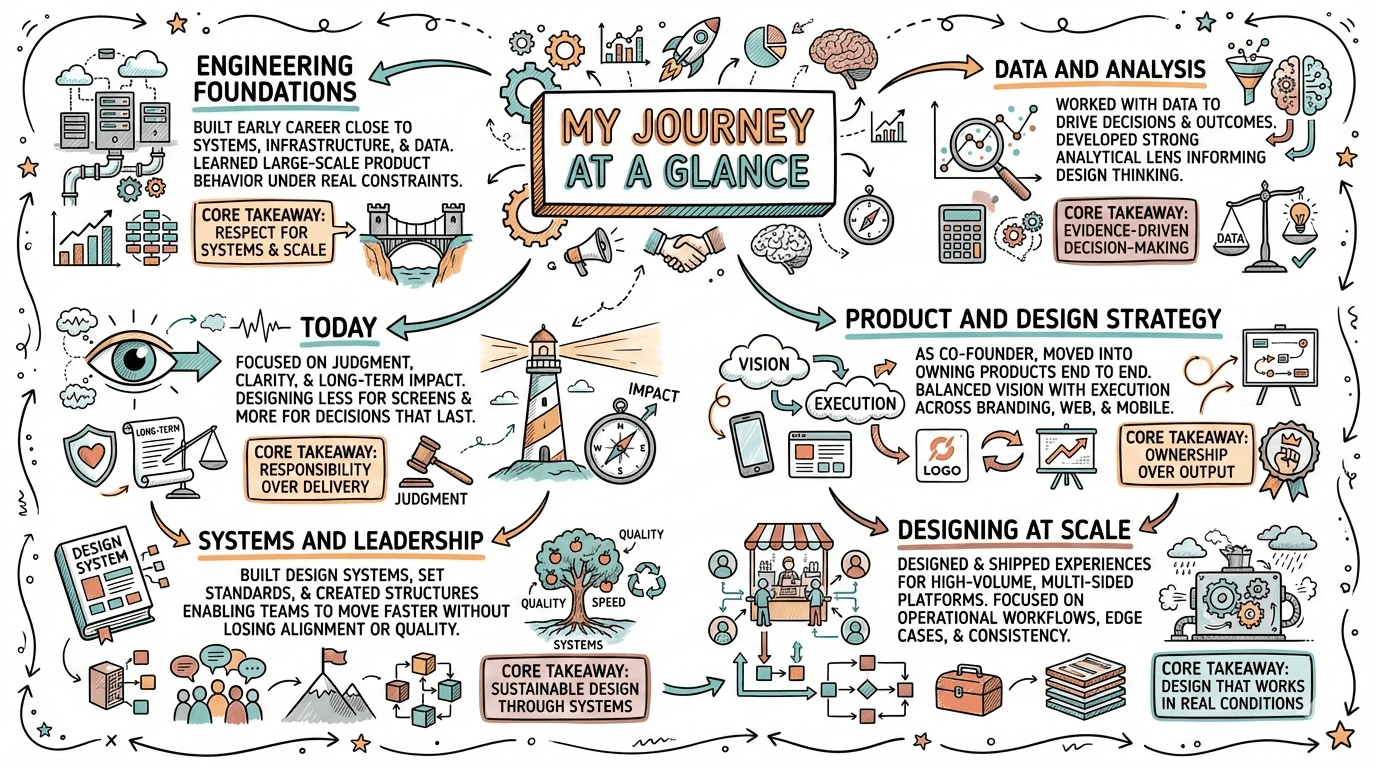
I began my career in engineering, where I worked with systems and limitations and saw how products are put together. At some point, I realized that I was more interested in the choices that went into the work than the work itself. I wanted to know why something was made the way it was and what that meant for the people who used it. That's what made me want to work in and now lead UI and UX design.
SERVICES
DEEP DIVES · MEANINGFUL CONTRIBUTIONS · PRODUCT THINKING · SYSTEMS DESIGN · DECISION-MAKING UNDER CONSTRAINTS
INFRASTRUCTURE THINKING, DOCUMENTED
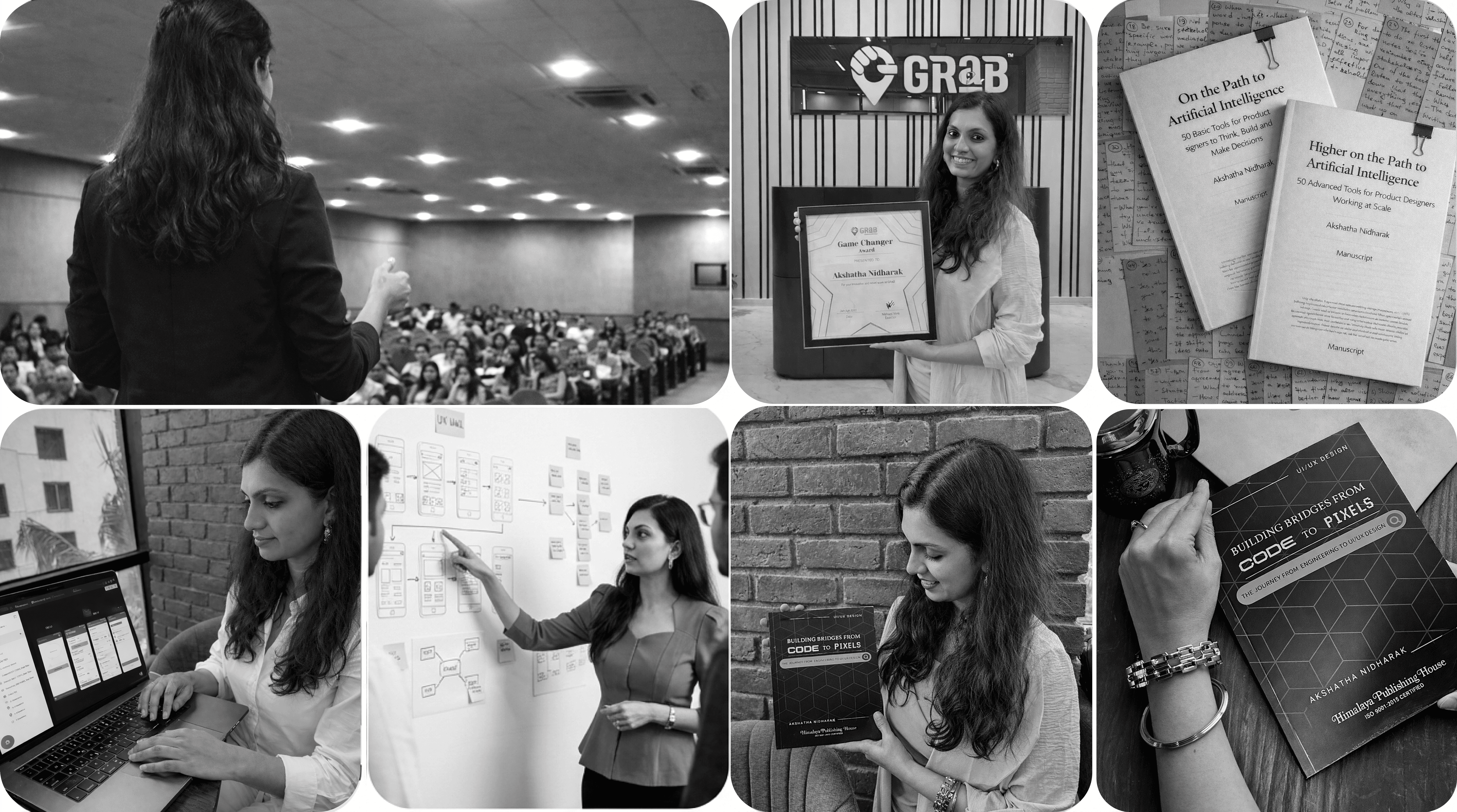
I've written three books solving specific problems: How do engineers transition into design thinking? (Building Bridges from Code to Pixels). Which AI tools actually deliver value for designers? (On the Path to Artificial Intelligence, Higher on the Path—100 tools total, honestly assessed). These aren't aspirational—they're tactical.
"The best design work isn't just what you ship—it's the knowledge you formalize. " I believe systematic thinking should be shared, not hoarded. These aren't theoretical explorations—they're practical frameworks born from shipping at scale, solving real constraints, and learning what actually works under pressure.
THE JUDGMENT CALLS METRICS CAN'T MAKE.

Moments like these are shaped by values, judgment, and responsibility that don’t always fit neatly into metrics.
My engineering background taught me beautiful concepts mean nothing without successful implementation. I own the translation between strategy and delivery—whether improving SLA to 75%, reducing post-release issues by 25%, or embedding AI to cut design effort by 20-30%. I'm accountable for what ships and performs.
While deeply data-driven from my analyst years, I take ownership of decisions requiring human judgment: prioritizing long-term trust over short-term conversion, knowing when to simplify rather than optimize, and advocating for sustainable practices under aggressive timelines.
CROSS-FUNCTIONAL ALIGNMENT AND TEAM VELOCITY
I manage developers, alongside designers, conduct code reviews, define KPIs with structured cycles, and lead design reviews with founders, PMs, and engineers. Design doesn't just hand off specs—it actively participates in roadmap decisions, technical discussions, and release planning.
From mentoring designers and developers to Improving tech hiring to 38% rider referral conversion rate to "Game Changer 2022" award, I own the growth of people and processes around me. Whether shipping a Techathon site in one day or reducing hiring friction, I'm accountable for making the organization more effective.
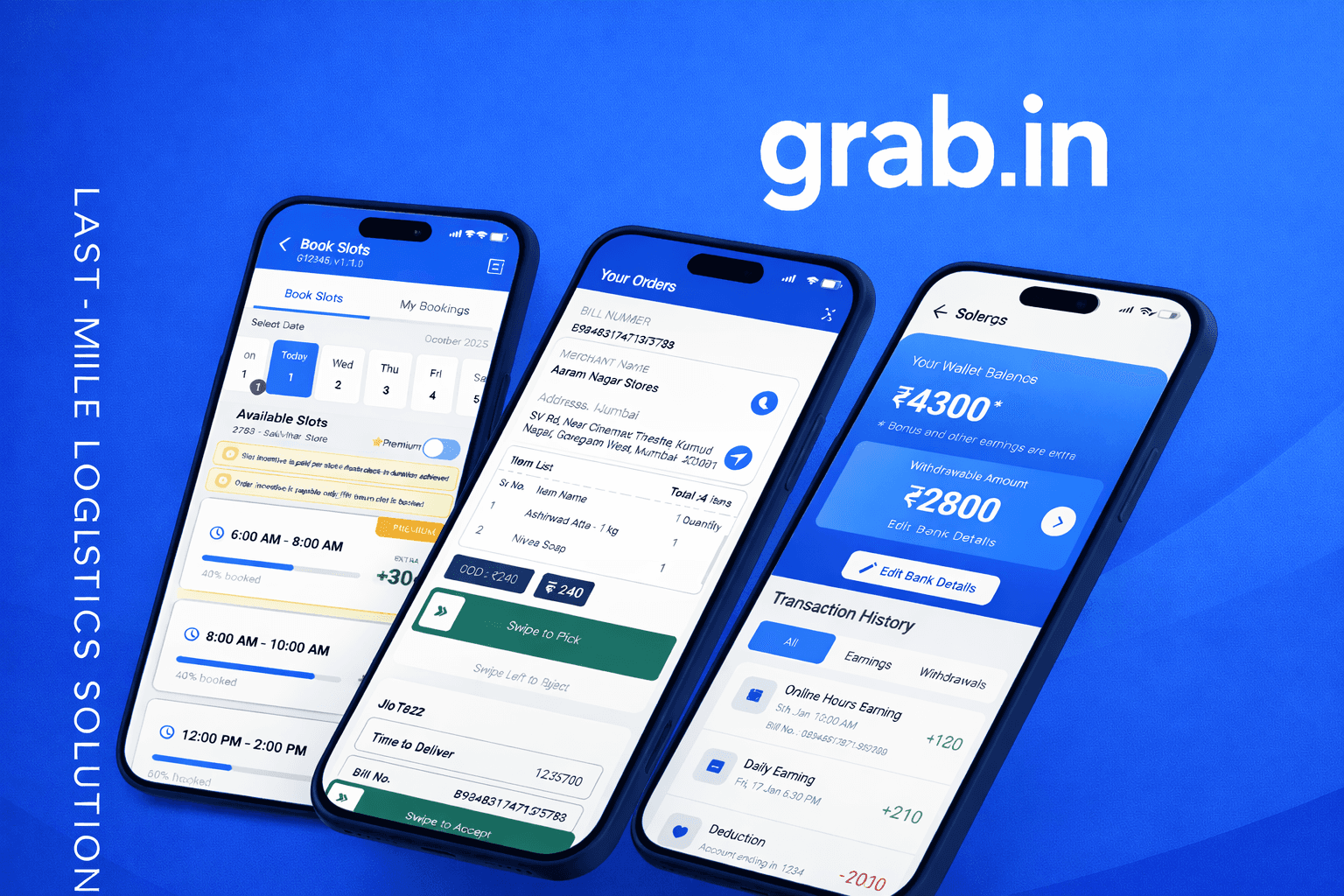
I measure success by SLA improvements, reduced UX issues, increased conversions, faster releases, and reduced effort. From Infosys and Oracle days driving revenue to today's platform work, I take responsibility for business and user outcomes that matter—and own both wins and learnings.
MICROSITES
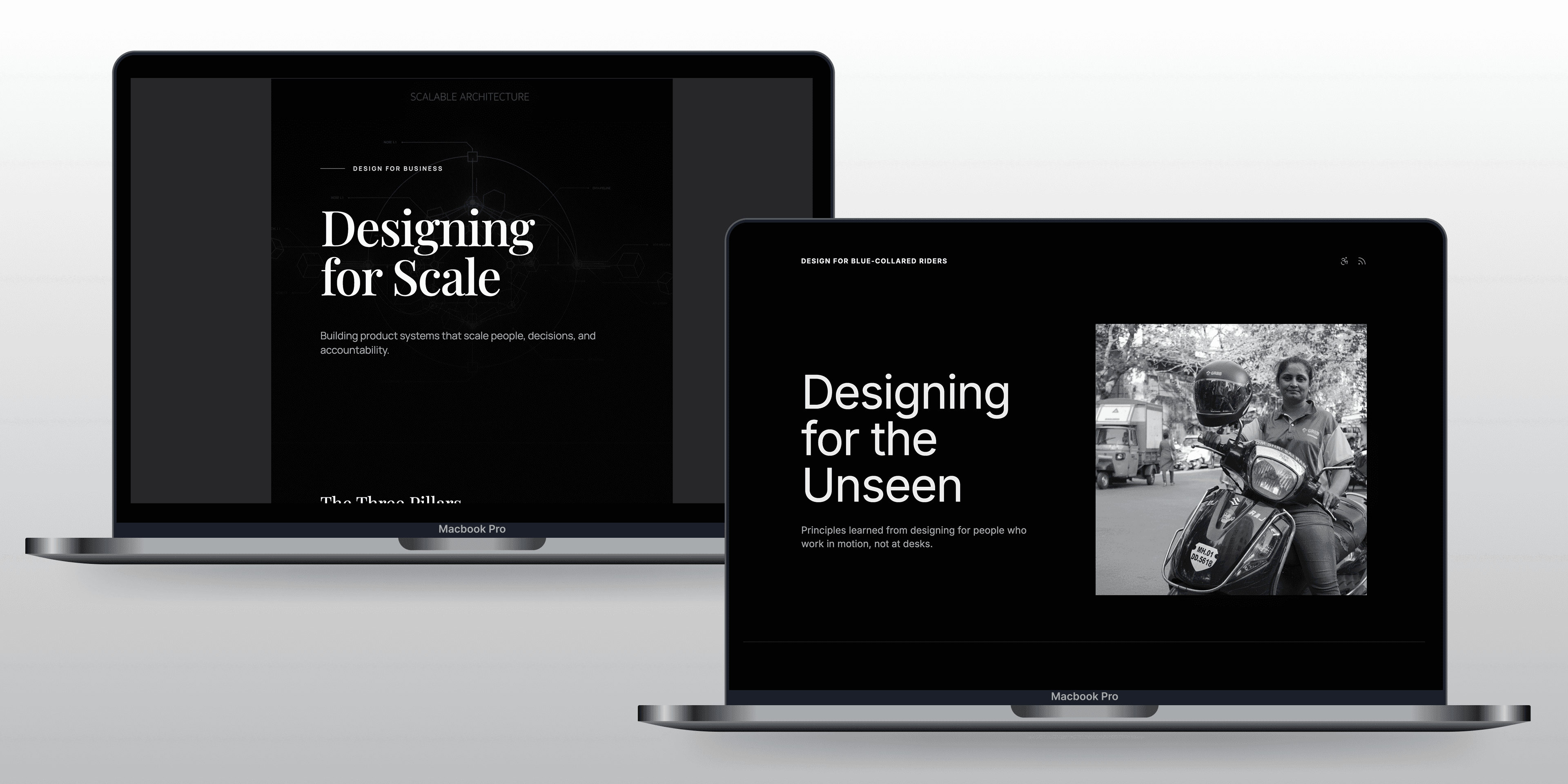
I've built two microsites that explore the two ends of the same design responsibility—designing for human constraints and designing for organizational scale.
Designing for the Unseen and Designing for Scale
These microsites represent a single point of view: good design creates clarity under pressure—whether that pressure comes from human constraints or from scale itself. One focuses on the individual user in motion, where design decisions affect daily livelihood and safety. The other focuses on the organizational system at scale, where design decisions affect velocity, quality, and risk. Both require the same discipline: understanding constraints deeply, eliminating unnecessary complexity, and ensuring that what you build actually works under real conditions.
REDUCTION IN DESIGN-TO-DEV TIME
REDUCTION IN UX ISSUES